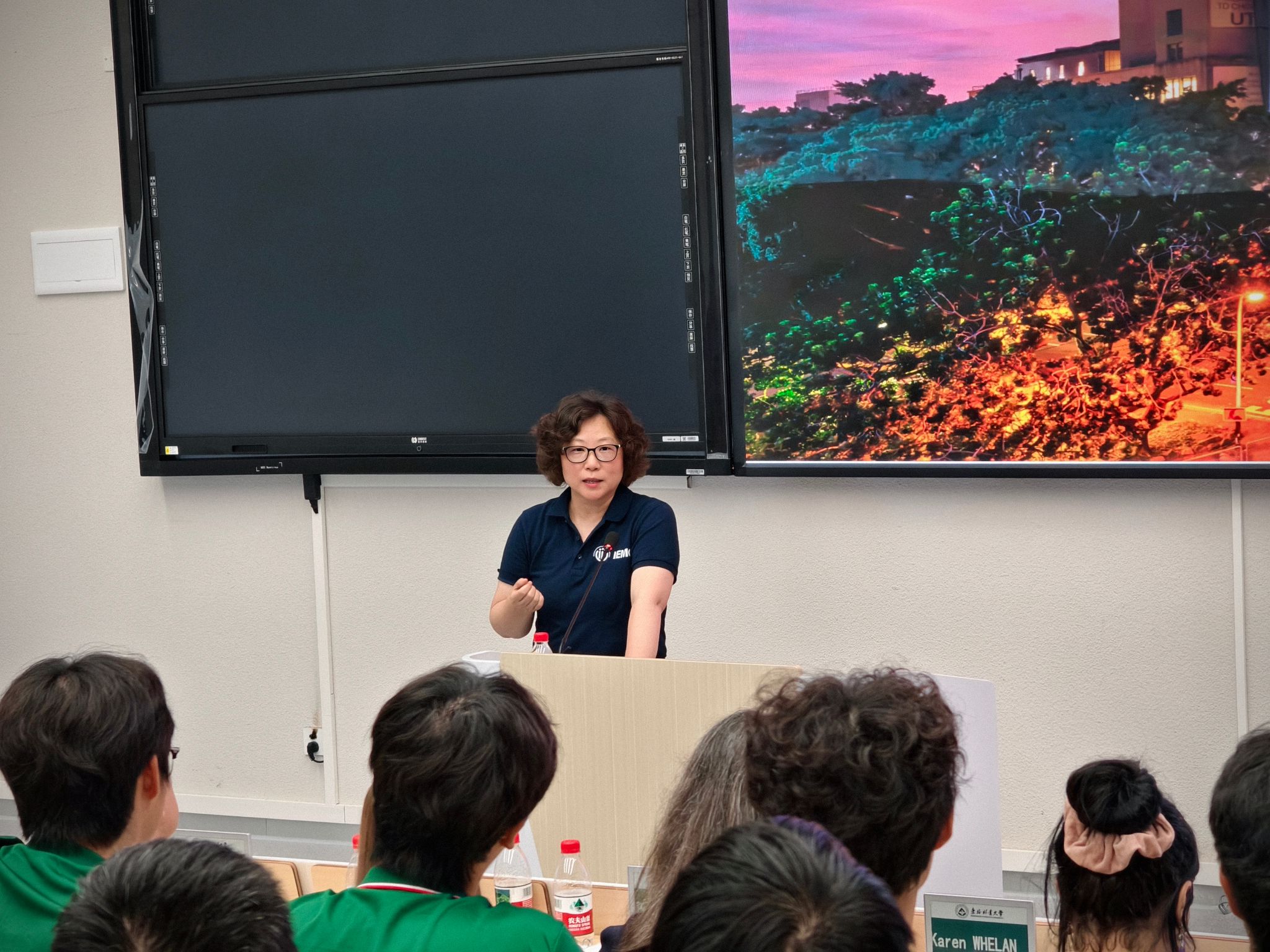
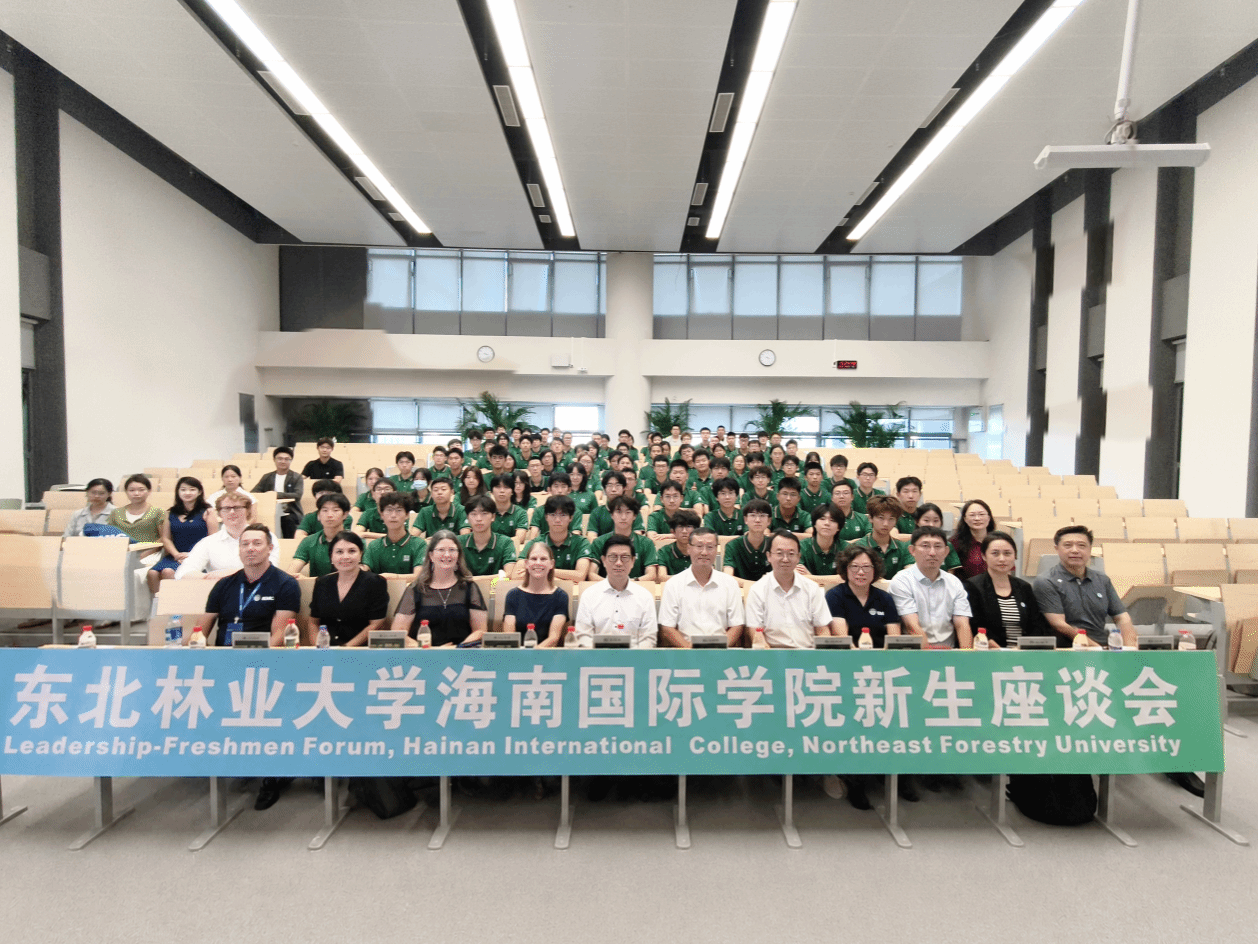
On November 2, President Song Wenlong and Li Mingze, Member of the Standing Committee of the University Party Committee and Vice President, led a delegation to the Hainan Lingshui Li’an International Education Innovation Pilot Zone. They held discussions successively with faculty based in Hainan and freshmen of the 2026 intake at Hainan International College to gain first-hand insights into their work, study and life, and set clear directions for the college’s development. Leo Mian Liu, Vice-Chancellor of the University of Technology Sydney, Australia; Peta Wyeth, Dean of the Faculty of Engineering and Information Technology; Karen Whelan, Associate Dean; Aycenk Melek, Overseas Outreach and Development Manager; Jenny Wang, Executive Director of the Australian Institute for Future Education (AIFE); Sun Zhiping, Director of the University’s International Cooperation Office; Liu Zhiming, Dean of Hainan International College; Ma Rui, Secretary of the Directly Affiliated Party Branch of Hainan International College; and Luo Wei, Deputy Secretary of the Directly Affiliated Party Branch and Vice Dean of Hainan International College, attended relevant activities.
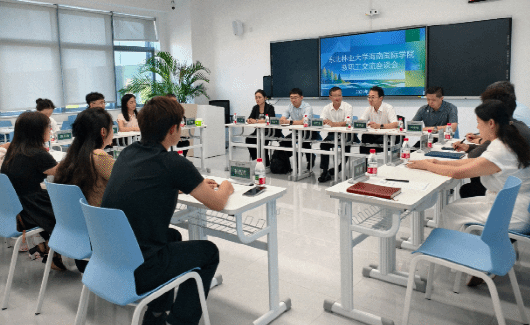
At the faculty forum, Song Wenlong and Li Mingze held discussions with all faculty members of Hainan International College stationed in Hainan. They learned in detail about the faculty’s work and life in Hainan and put forward requirements for the college’s development in the next phase. Song Wenlong pointed out that, first, it is necessary to strengthen the leadership team development, clarify the division of responsibilities, enhance coordination, pool strengths for the college’s development, and continuously improve the efficiency of management and operation. Second, teaching operation shall be guaranteed. The management mechanism for teaching activities shall be improved, and efforts on teaching organization, support and quality management shall be delivered to ensure steady and orderly teaching. Third, student administration shall be solidly implemented. Adhering to the student-centered approach, the college shall pay attention to students’ growth and practical needs, earnestly carry out daily education, administration and support services, respond promptly to students’ concerns, and foster a sound environment for students’ study and life.
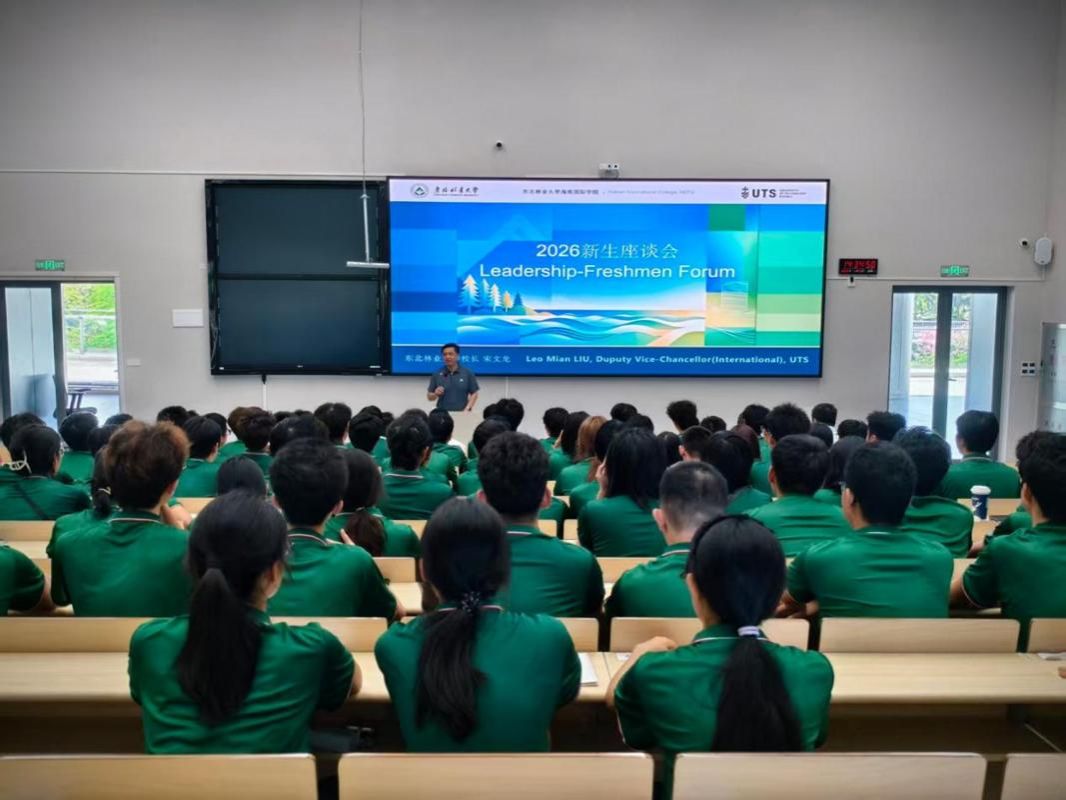
Subsequently, university leaders from Northeast Forestry University and the University of Technology Sydney held a discussion with the 2026 intake freshmen of Hainan International College. The forum was chaired by Liu Zhiming.
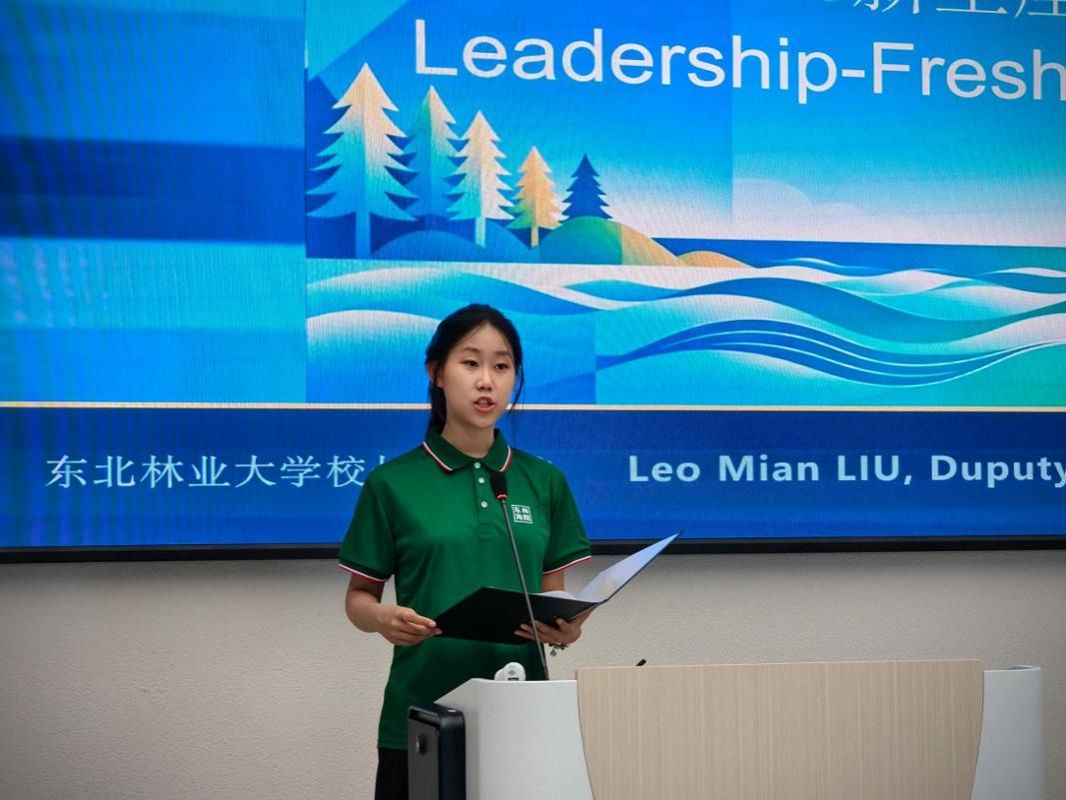
At the forum, student representative Sun Wenqi shared her understanding and expectations of the college’s learning environment, Chinese-foreign cooperative educational resources and academic studies based on her study and life experience since enrollment. Xue Yuhang, representative of teaching faculty, briefed on the freshmen’s academic performance since the start of the semester.
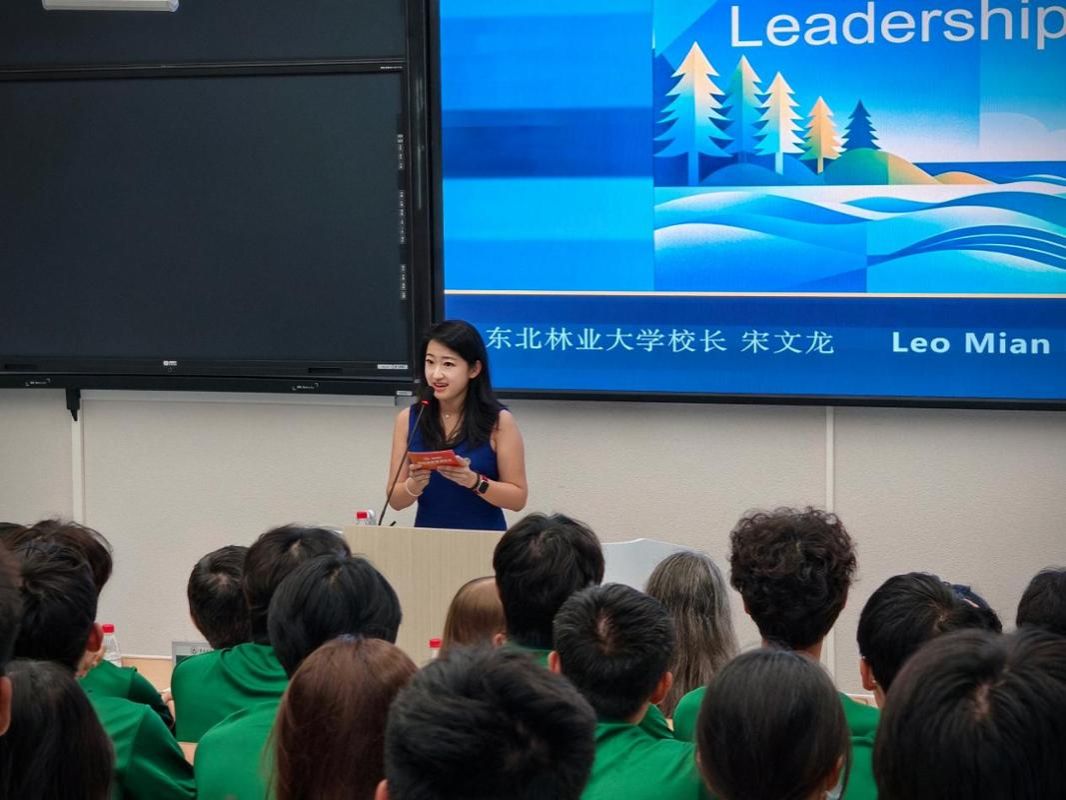
Song Wenlong noted that Hainan International College serves as a key platform for Northeast Forestry University to deepen international exchanges and cooperation and explore international talent training models. As the first cohort of undergraduate students, they are witnesses, participants and contributors to the college’s development. He encouraged the students to cherish their learning opportunities, make full use of high-quality educational resources offered by the University and the University of Technology Sydney as well as the open platform of the Pilot Zone, broaden their global vision, consolidate their academic foundation, and continuously enhance their cross-cultural communication and practical capabilities. The University will continue to attend to students’ developmental needs and provide support and guarantees for their study, life and growth.
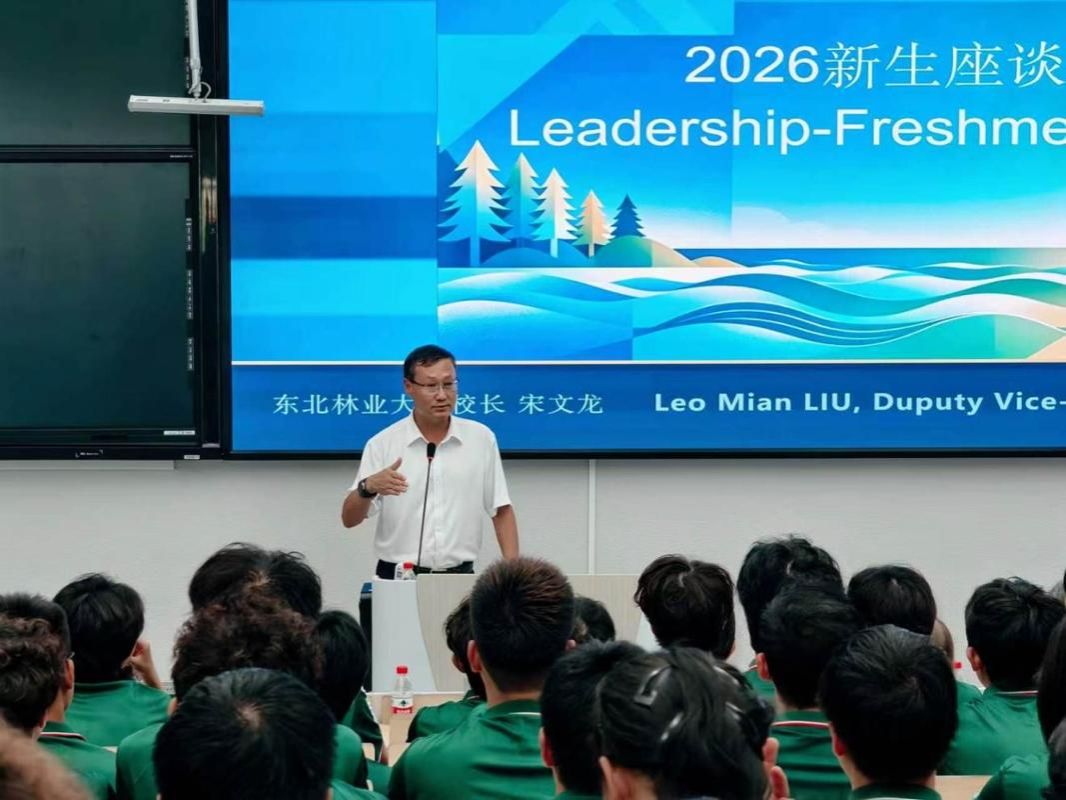

Peta Wyeth and Karen Whelan respectively introduced the profile, disciplinary strengths, teaching resources and student development support of the University of Technology Sydney and its Faculty of Engineering and Information Technology. They highlighted the programme portfolio, faculty strength and research and innovation achievements, and shared the university’s distinctive practices in industry-university-research collaboration, practical industry projects and the development of innovation facilities.
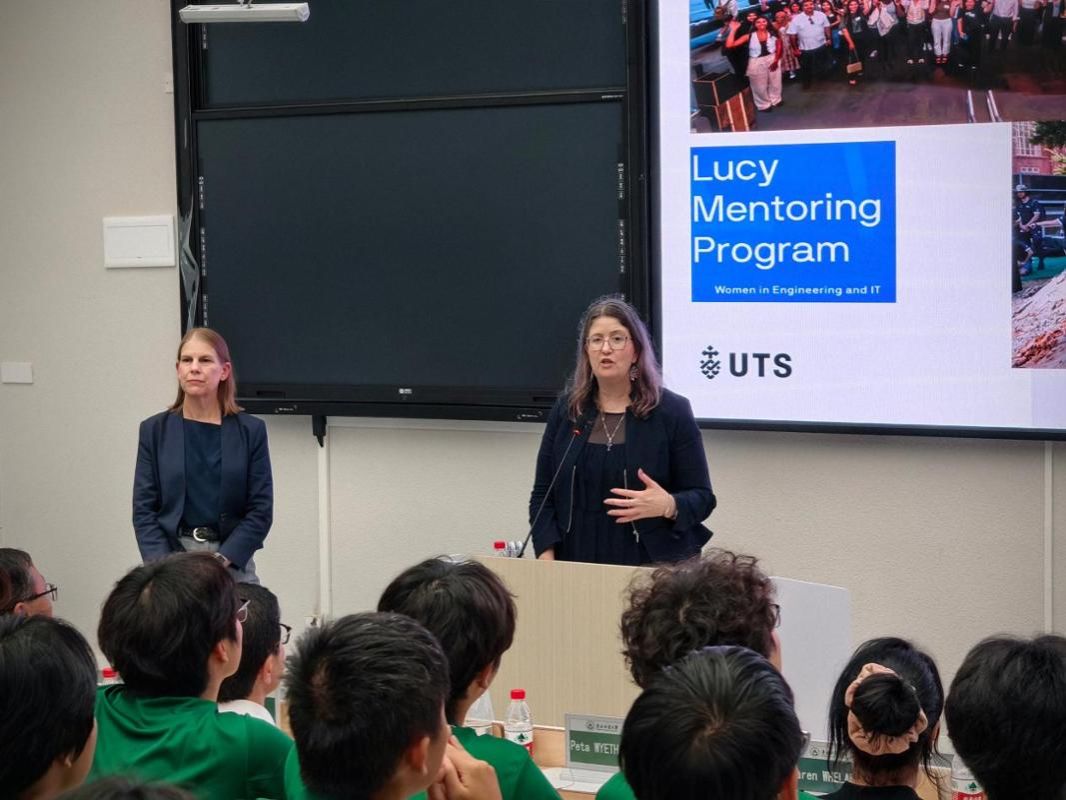
Jenny Wang shared her insights on talent cultivation in the era of artificial intelligence against the backdrop of global education trends. She encouraged students to consolidate their foundations in computer science, attach importance to interdisciplinary integration, apply what they have learned to tackle future challenges, and broaden their development prospects on this international learning platform.
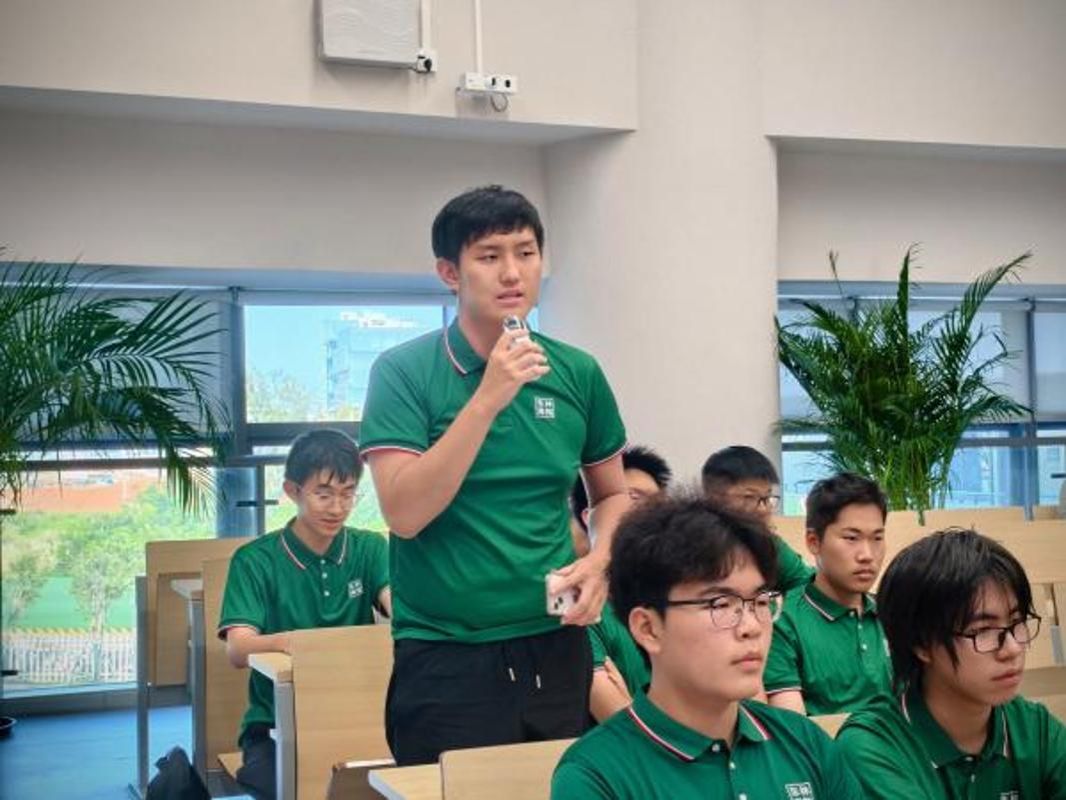
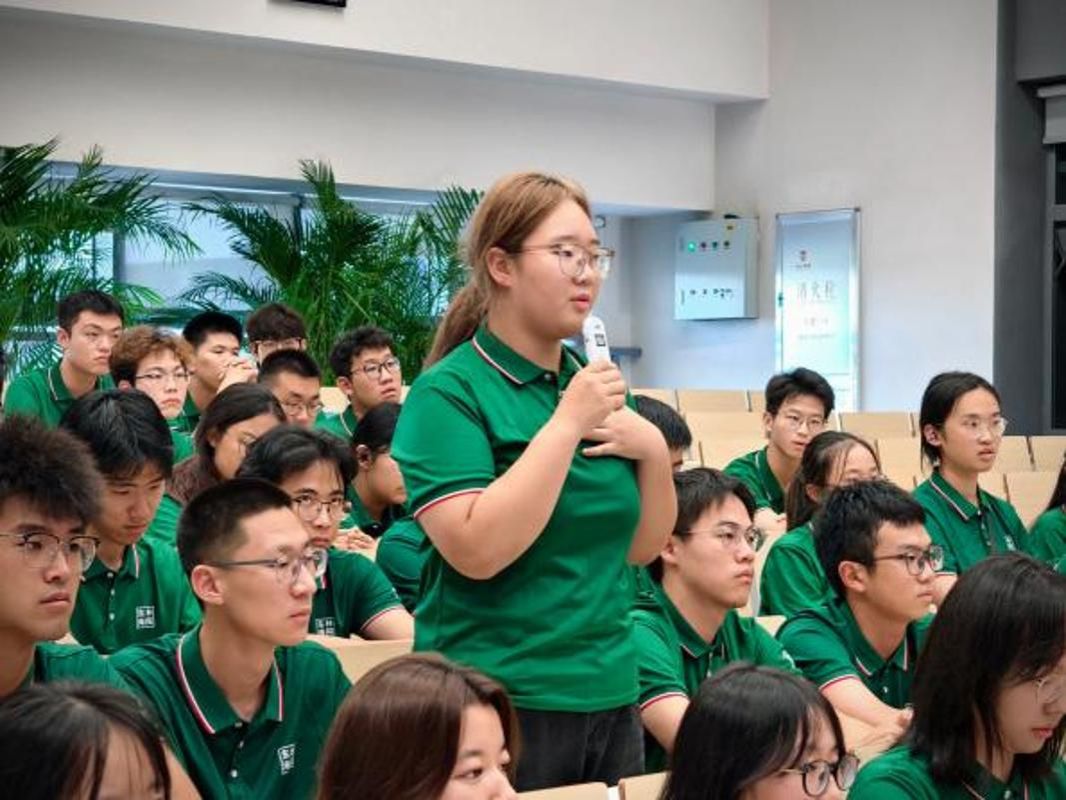
During the Q&A session, faculty and students engaged in in-depth exchanges with representatives from the University of Technology Sydney on topics including internship and research opportunities during their studies at UTS, scholarship applications, overseas career development, postgraduate progression pathways, and curriculum adaptation.(Text & Photos: Hui GAO)