The 7th International Conference of the Asia-Pacific Forestry Education Coordination Mechanism was successfully held in Hainan, China from July 7 to 11. Hosted by the Asia-Pacific Network for Sustainable Forest Management and Rehabilitation (APFNet), the conference was undertaken by our university.
Initiated by APFNet in 2010 and officially launched in 2011, the Asia-Pacific Forestry Education Coordination Mechanism serves as a regional platform for forestry education cooperation and exchanges. It aims to promote the development of forestry education in the Asia-Pacific region through enhanced cooperation and collaborative activities, so as to support the organization’s goal of advancing forest restoration and sustainable management across the region. To date, a total of 58 universities and institutions have participated in and conducted cooperation under the mechanism.
At the opening ceremony, Dr. Lu De, Secretary-General of APFNet, Professor John Innes, Chair of the Asia-Pacific Forestry Education Coordination Mechanism from the University of British Columbia, Ding Renzhan, Vice President of Southwest Forestry University, and Liu Zhiming, Dean of Hainan International College of our university, delivered speeches respectively.
Lu De extended a warm welcome to all participants and expressed gratitude to the University of British Columbia for its efforts as the chair institution of the mechanism. He pointed out that with joint efforts of all parties, the Asia-Pacific Forestry Education Coordination Mechanism will give full play to its platform advantages, deepen regional exchanges and cooperation in forestry science and education, and facilitate the high-quality development of forestry education in the Asia-Pacific region.
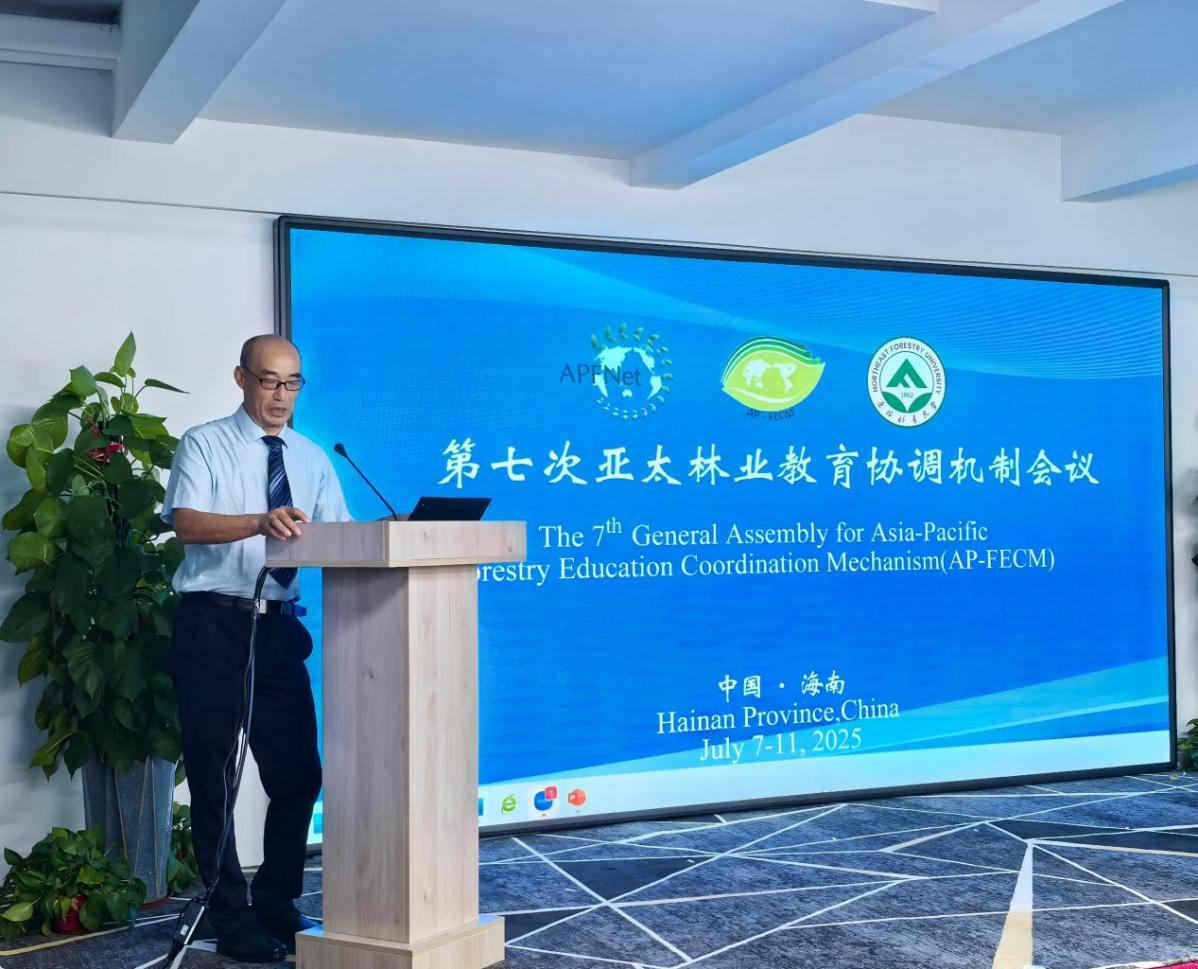
Speech by Dr. Lu De, Secretary-General of the Asia-Pacific Network for Sustainable Forest Management and Rehabilitation (APFNet)
Taking Asia-Pacific forestry and forestry education as the starting point, Professor John Innes illustrated the global proportion and pivotal role of regional forestry and forestry education contributions. He further analyzed the scale and evolving trends of global higher forestry education at the current stage, and compared the opportunities and challenges faced by higher forestry education over the past decade. His remarks guided participating experts to discuss the future development directions and plans for Asia-Pacific forestry education.
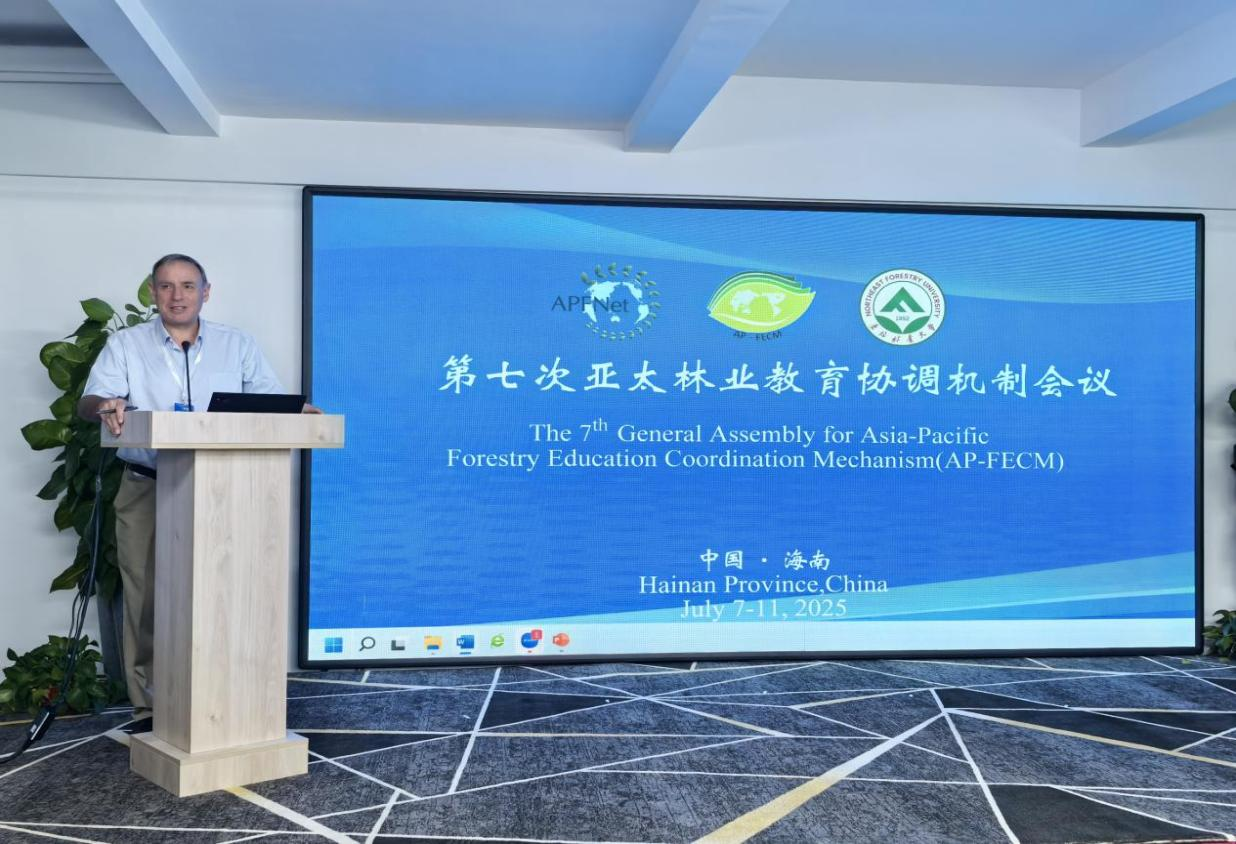
Speech by Professor John Innes, Chair of the Asia-Pacific Forestry Education Coordination Mechanism
As the representative of the co-chair institution of the Asia-Pacific Forestry Education Coordination Mechanism, Ding Renzhan delivered a speech at the ceremony. He stated that since its election as the co-chair institution, Southwest Forestry University has actively participated in various undertakings of the mechanism and cooperated with member institutions to advance its sustainable development. The university will continue to leverage its strengths in forestry science and technology, talent cultivation and regional cooperation to promote the joint development and sharing of high-quality resources within the mechanism.
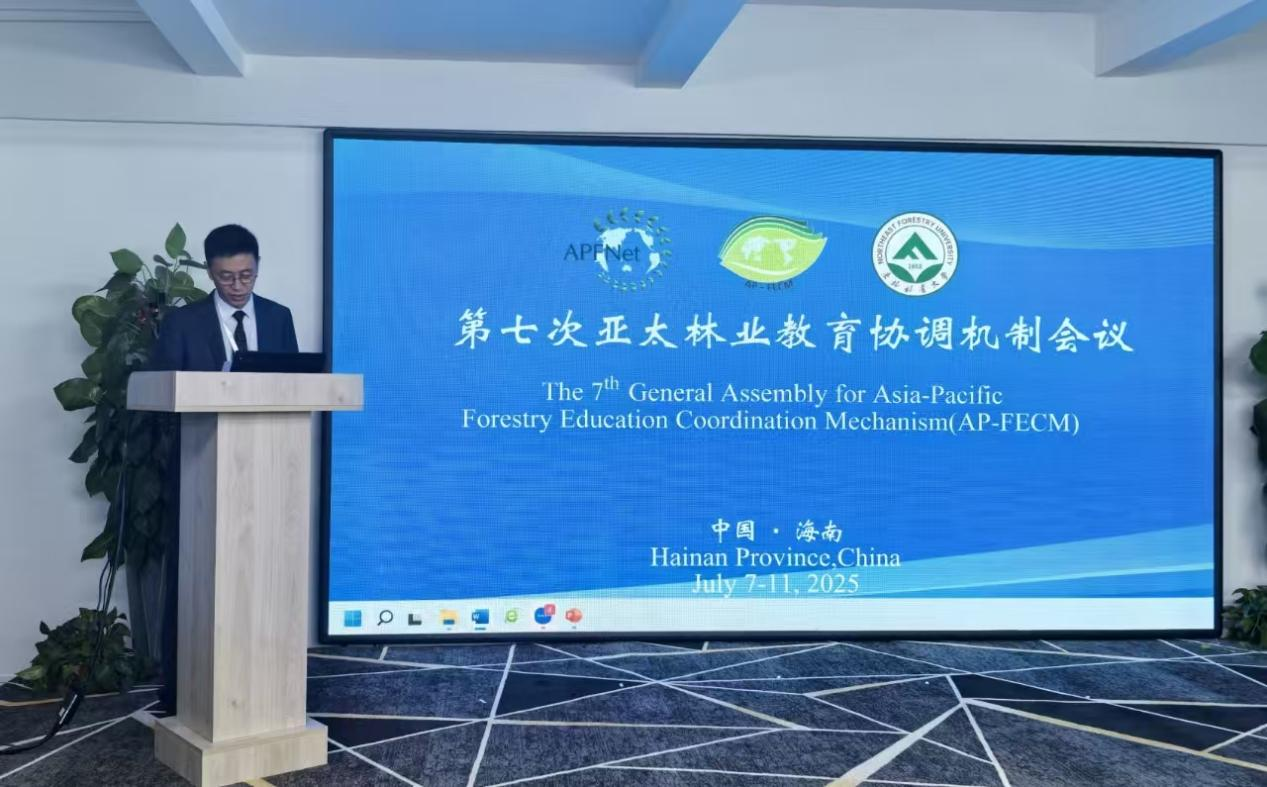
Speech by Ding Renzhan, Vice President of Southwest Forestry University
As the representative of the conference organizer, Liu Zhiming delivered a speech. He expressed sincere gratitude to the Asia-Pacific Network for Sustainable Forest Management and Rehabilitation (APFNet) for its trust and to all participating parties for their active engagement and collaboration. He also briefly introduced the historical evolution and international cooperation achievements of Northeast Forestry University. He noted that the university has long been committed to integrating ecological development with forestry education. Taking this international conference as an opportunity, he hoped that all parties could deepen cooperation and expand exchanges. Through in-depth thematic discussions, participants can reach extensive consensus on educational philosophies and the development of micro-courses (international credit courses), achieve breakthroughs in scientific research cooperation, jointly foster high-quality development of forestry education and ecology in the Asia-Pacific region, and contribute to the sustainable development of regional forestry.
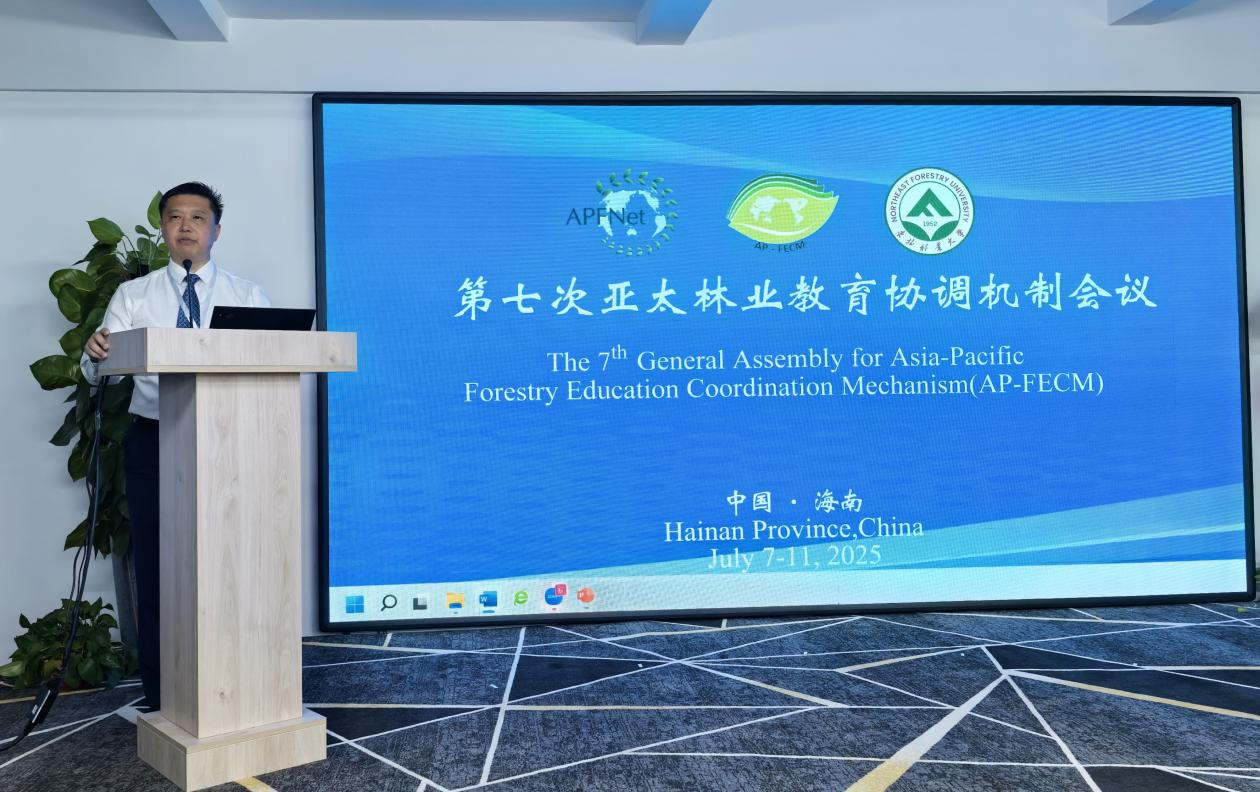
Speech by Liu Zhiming, Dean of Hainan International College, Northeast Forestry University
The conference gathered more than 50 renowned scholars from 14 economies, including Canada, Indonesia, Laos, Myanmar, Bangladesh, Nepal, Sri Lanka, Cambodia, Thailand, Peru, Mongolia, Chile, the Philippines and Vietnam. Centering on key themes including industry-university-research cooperative micro-course programs, technological innovation in forestry authorities and higher forestry education, as well as interdisciplinary curricula and modern forestry education, the conference arranged in-depth roundtable discussions on each topic for all participating guests and delegates.
At the conference, Professor Wang Yonggui, Vice Dean of the College of Material Science and Engineering, was invited to the roundtable session themed “Industry-University-Research Cooperative Micro-course Programs” and conducted in-depth exchanges with participating representatives. Han Donghui, a faculty member from the College of Forestry, attended the academic session on “Interdisciplinary Curricula and Modern Forestry Education” and delivered an academic report entitled Industry-oriented Integrated Training Paradigm and Curriculum Innovation for Professional Master of Forestry Programs.
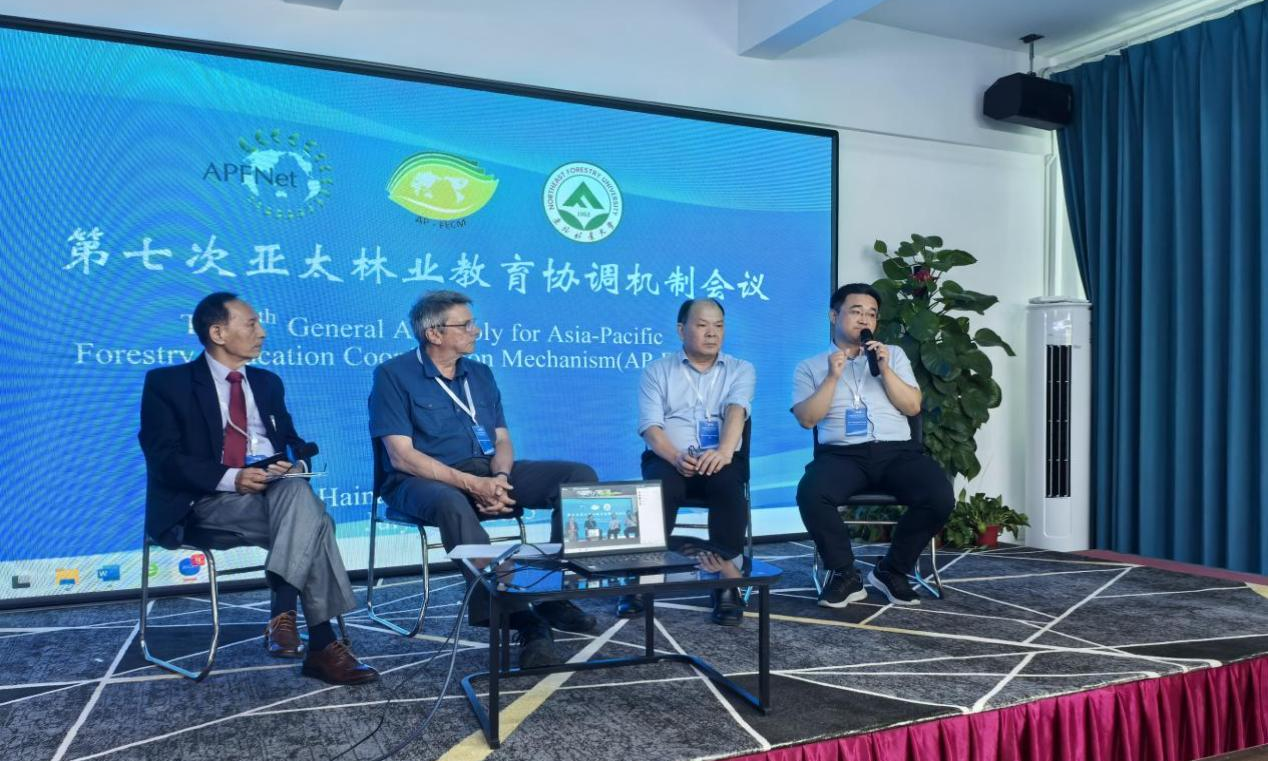
Professor Wang Yonggui, Vice Dean of the College of Materials Science and Engineering, was invited to participate in and deliver a speech at the roundtable forum
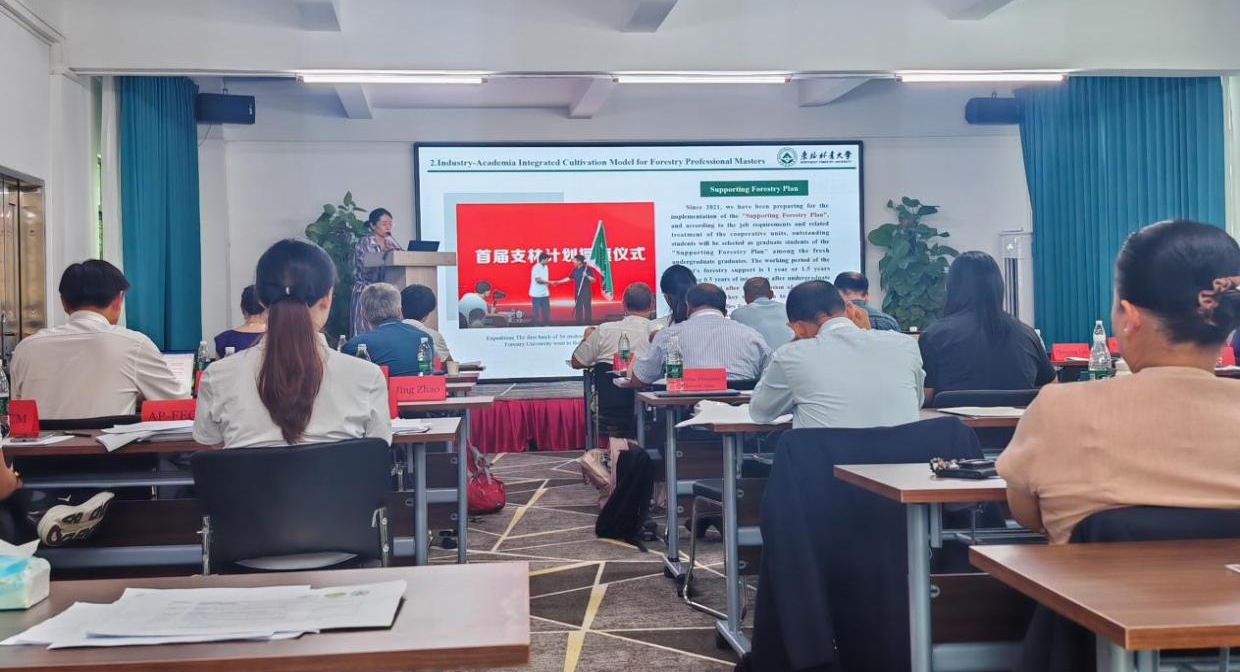
Han Donghui, faculty member of the College of Forestry, was invited to deliver an academic report
As the undertaker of the international conference, Northeast Forestry University dispatched six student volunteers from Aulin College to provide voluntary services, in addition to participating faculty representatives. During the conference, the volunteers were responsible for foreign guest reception, venue arrangement, on-site services and conference coordination for international delegates. Proficient in English, dedicated and attentive, the volunteers fully demonstrated the global competence and volunteer spirit of NEFU students, and received unanimous recognition and high praise from the conference organizer and all participants.
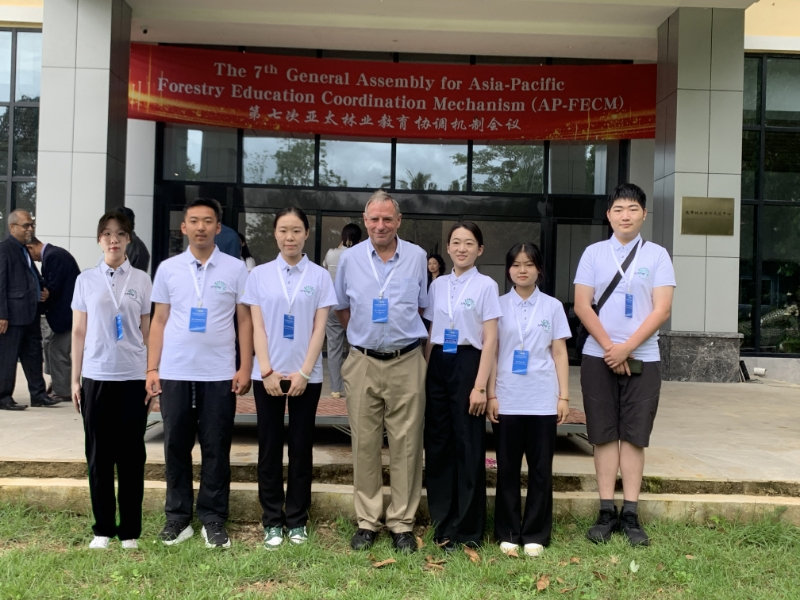
Professor John Innes, Chair of the Asia-Pacific Forestry Education Coordination Mechanism, took a group photo with student volunteers from Northeast Forestry University
Northeast Forestry University has always attached great importance to international education and foreign cooperative exchanges. The successful hosting of this international conference has effectively enhanced the university’s influence within the Asia-Pacific Network for Sustainable Forest Management and Rehabilitation (APFNet) and facilitated its participation in relevant activities of the International Union of Forest Research Organizations (IUFRO). Leveraging its disciplinary strengths, the university will continue to build high-quality platforms for forestry scientific research and academic exchanges, attract more forestry researchers across the Asia-Pacific region, and launch international cooperative programs for forestry scientific research. Centering on the Belt and Road Initiative and relying on the premium international resources of APFNet, NEFU will further integrate its forestry education with global systems, deepen mutual understanding, expand pragmatic cooperation and pursue mutual benefits and win-win results with all member institutions under the framework of the Asia-Pacific Forestry Education Coordination Mechanism.